
Vitamin D is a important nutrient for the human body, which is crucial for bone health, immune function, and overall well-being. Vitamin D deficiency is a common problem, and symptoms can include fatigue, bone pain, and weak muscles. In some cases, doctors may prescribe high-dose vitamin D supplements, such as 50,000 IU (international units), to help with vitamin D deficiency.
However, how soon will I feel better after taking vitamin D 50,000 IU depends on several factors. These include the level of vitamin D deficiency in your body, your physical condition, and how your body responds to the supplement.
Vitamin D Deficiency: Causes and Risk Factors
The main causes of vitamin D deficiency are:
- Lack of sunlight: 80-90% of vitamin D in the body is made from sunligh. People who work indoors or spend little time outdoors may be deficient.
- Skin color: Dark skin has more melanin, so it absorbs less sunlight.
- Age: As you age, your skin synthesizes less vitamin D.
- Obesity: Since vitamin D is fat-soluble, excess fat accumulates in fat, reducing its amount in the blood.
- Certain diseases: Vitamin D absorption is impaired in celiac disease, Crohn’s disease, or kidney disease.
People who may need a 50,000 IU dose:
- Blood test shows vitamin D <20 ng/mL (severe deficiency)
- Long-term fatigue, bone pain, or depression
- Patients with multiple sclerosis (MS), osteoporosis, or autoimmune diseases
Vitamin D 50,000 IU types: D2 vs D3
- Vitamin D2 (ergocalciferol): Mainly found in plants, less potent.
- Vitamin D3 (cholecalciferol): Made from animal sources (fish, eggs, liver) and sunlight, more effective for the body.
When you will feel better after taking vitamin D 50,000 IU?
A dose of 50,000 IU is usually given in the form of D3, because it is quickly absorbed into the blood and has a long-lasting effect.
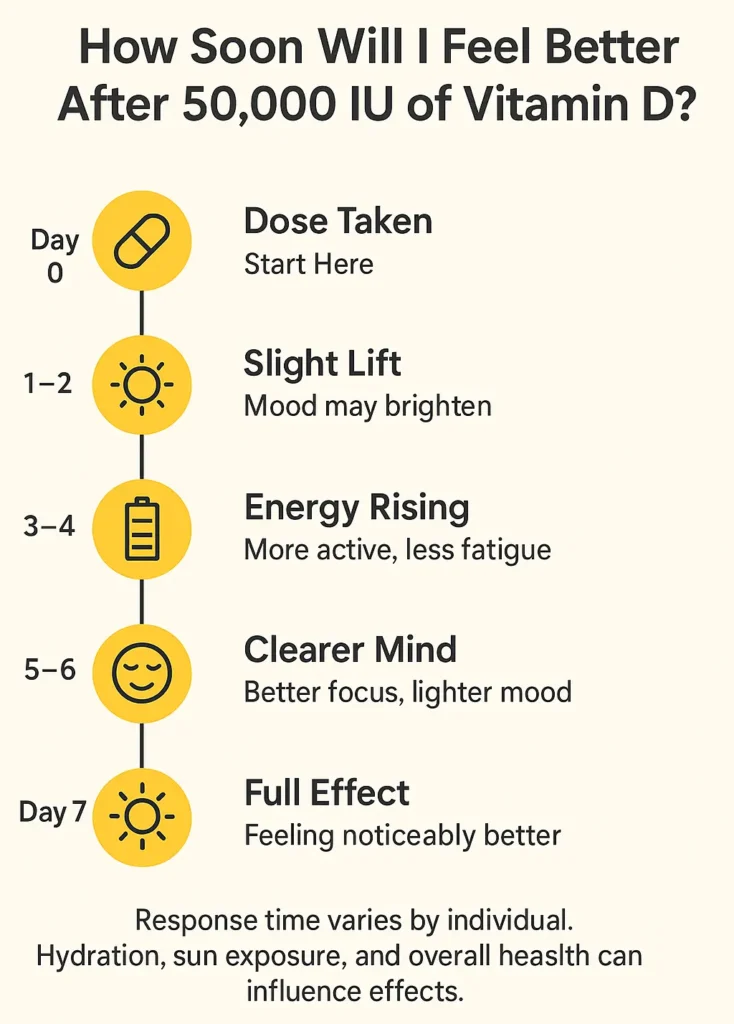
How soon will I feel better after taking vitamin D 50,000 IU depends on your initial vitamin D levels, your body’s ability to absorb it, and the severity of your symptoms.
Initial response (24-48 hours):
Some people start to notice an improvement in fatigue or muscle weakness within 1-2 days (if symptoms are due to vitamin D deficiency).
However, it usually takes several weeks for blood levels of vitamin D (25-OH-D) to increase significantly.
Full effect (2-4 weeks):
High-dose (50,000 IU) supplements are usually given in weekly or monthly courses, and it can take 3-6 weeks for blood levels to stabilize.
If your vitamin D deficiency is severe (<20 ng/mL), it may take 1-2 months for symptoms (such as bone pain, fatigue, mood swings) to improve.
Related Information – How to Flush Vitamin D out of System Naturally?
Blood test required: For an accurate assessment, check your blood after 8-12 weeks to see whether your levels have reached the optimal range (30-50 ng/mL).
What happens after taking 50,000 IU of vitamin D?
The improvements you can notice in your body during the following time periods.
1. First 24 hours:
Absorption begins in the liver and fat tissue. Vitamin D levels in the blood begin to increase, but no change in symptoms is noticed.
2. After 3-7 days:
Some patients experience increased energy, decreased fatigue, or decreased dizziness. Mood swings may improve slightly.
3. After 2-4 weeks:
Bone and muscle pain begins to decrease (vitamin D increases calcium absorption). Immunity improves: Frequency of colds and infections decreases. Improvement in skin and hair health (reduced hair loss).
4. After 1-3 months:
Blood vitamin D levels stabilize (30-50 ng/mL). Long-term benefits such as heart health, reduced depression, increased bone density, etc. are seen.
How to get results fast? 6 ways to increase absorption
- Consume with fatty foods: Taking with avocado, coconut oil, nuts, or eggs increases absorption by 30-50%.
- Foods rich in magnesium and vitamin K2: spinach, kelp, cheese—these increase the effectiveness of vitamin D.
- Drink plenty of water: Dehydration inhibits absorption.
- Take probiotics: Vitamin D absorption is better when gut health is good.
- Avoid alcohol and caffeine: They disrupt the metabolism of vitamin D.
- Take in the morning or afternoon: Absorption is more effective during the day than at night.
Side effects and precautions of Vitamin D 50,000 IU
Common side effects:
- Headache
- Nausea
- Constipation or diarrhea
Serious risks (in excess doses):
- Hypercalcemia: Increased calcium in the blood can lead to kidney stones and heart problems.
- Liver or kidney damage (with long-term excessive consumption).
Who should be careful?
- Pregnant women
- Kidney or liver patients
- Those who already take calcium supplements
When to see a doctor?
- If fatigue or pain does not improve after 2 months.
- Pain during urination, bone pain or weight loss (signs of hypercalcemia).
- If vitamin D >100 ng/mL in a blood test (risk of toxicity).
Vitamin D 50,000 IU is a strong dose, which is effective in correcting acute deficiency. Initial improvement can occur in 3-7 days, clear results in 2-4 weeks and full recovery in 1-3 months. But this is not a one-time solution – you need to maintain your vitamin D balance through regular sunlight, eating foods rich in vitamin D and occasional blood tests.
FAQs
How often should I take Vitamin D 50,000 IU?
Doctors usually give one dose (50,000 IU) weekly for 4-8 weeks. Blood tests are then done to see whether further doses are needed. In the long term, conservative doses (such as 1000-2000 IU daily) can be taken.
What are the side effects of Vitamin D 50,000 IU weekly?
50,000 IU of vitamin D weekly is generally safe, but may cause headaches, nausea, hypercalcemia (thirst, fatigue), or kidney problems. Long-term use should be supervised by a doctor because of the risk of toxicity.
What to do in case of overdose?
If you experience vomiting, pain during urination, or bone pain, drink extra fluids, temporarily avoid calcium-rich foods, and contact your doctor.
Caution: Do not take high doses without consulting a doctor. Stay healthy, stay aware!